
NEWS
PIETRO CONSAGRA. THE ARTIST'S STUDIO AS A LIFELONG PERFORMANCE, ROME, ARTE IN NUVOLA
22 november - 24 november 2024
PIETRO CONSAGRA. THE ARTIST'S STUDIO AS A LIFELONG PERFORMANCE
Rome, Arte in Nuvola
Curated by Archivio Pietro Consagra
Concept and installation by Ruggero Moncada di Paternò
Photos by Claudio Abate, Ugo Mulas
Text by Gabriella Di Milia
Technical coordination Giorgia Gibertini, Fabrizio Introini
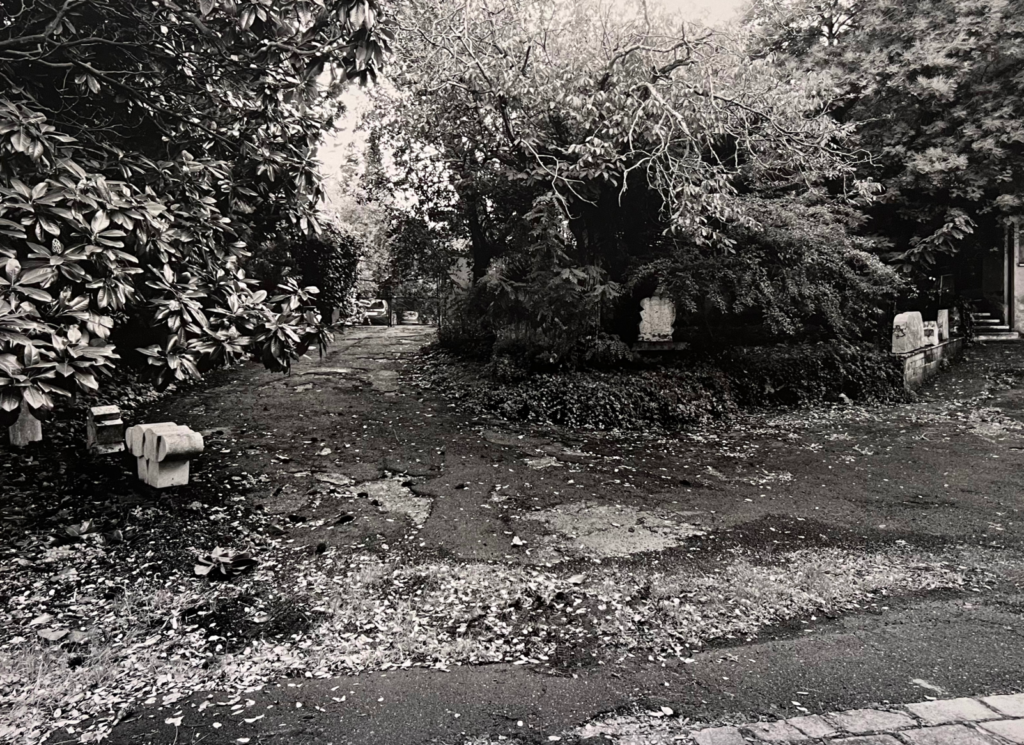
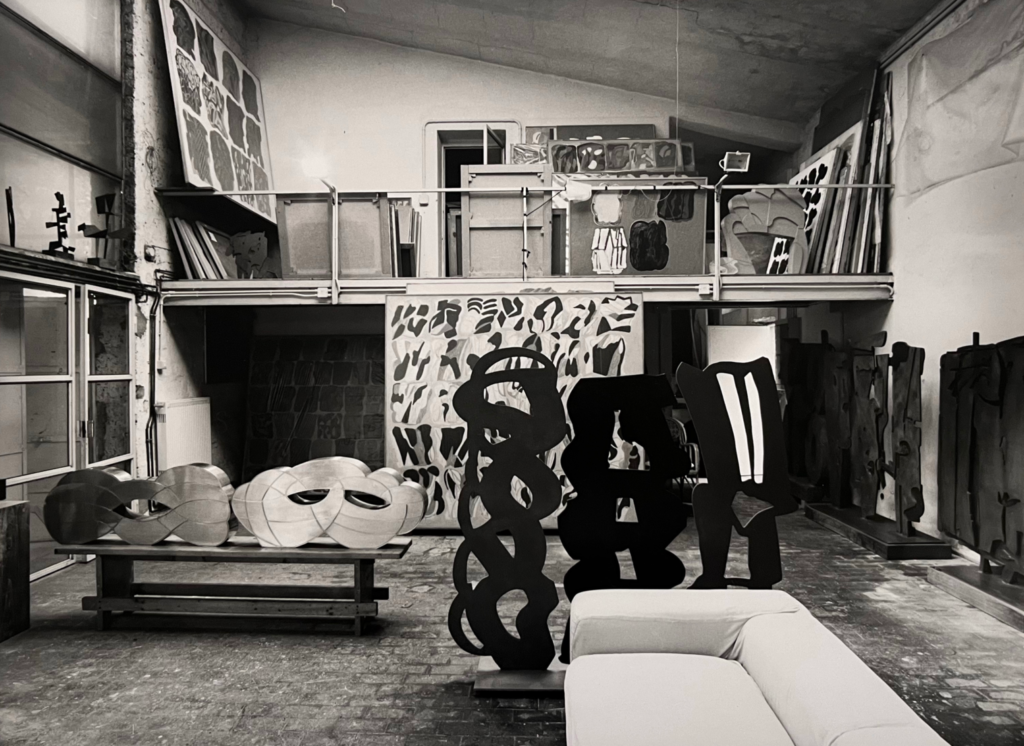
Pietro Consagra would have liked to recreate and display in an exhibition his studio in Via Margutta 48, where the Forma group was founded in 1947. This wish has led us today to make his no longer existing studio and garden in Via Cassia 1162 in Rome the subject of an exhibition within Arte in Nuvola, presenting a photographic sequence and some sculptures present there.
According to the American philosopher and semiotician Charles Peirce (1839-1914), photography is a true emanation of something that has been, that was there at a given moment: it is a trace that, in the absence of an real body or object, has the ability to show us that an object or body has existed as a source of light rays, which reach us who are here. Through photography we today have the ability to perceive something that belongs to the past, bringing it into the present and experiencing it as current.
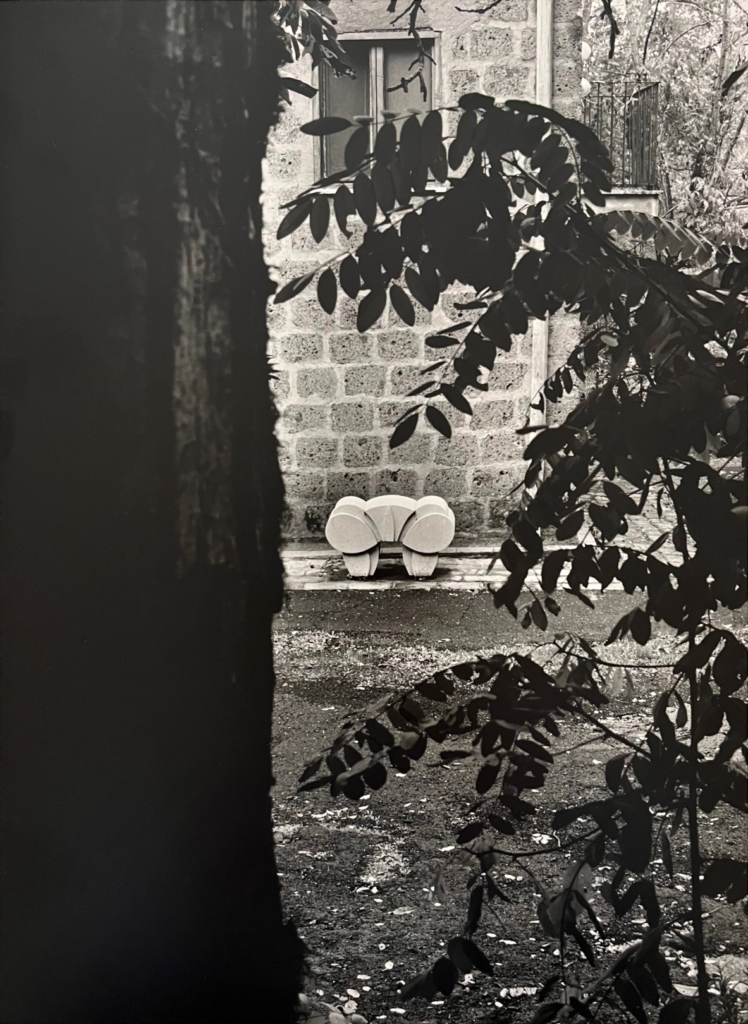
Consagra himself constantly photographed his sculptures, loved ones and the places he lived or visited during his travels. In a certain way, the still image and two-dimensionality of photography could be akin to his concept of frontal sculpture with minimal thickness. In its revelation from a single point of view, this sculpture indeed seems to function as an obstacle that encourages one to pause, generating a reflective pleasure. An artist’s studio, throughout the course of their life, becomes the image of the process of their thought and imagination. It is a workspace where everything is in constant flux, experienced as a passionate adventure in which the artwork, as it evolves, may unfold in stages that lead to a dreamed final result or remain unfinished. In a sense, the studio as a whole can also be seen as a complex self-portrait, built over time by the artist, and it is crucial not to lose track of it. In the studio on Via Cassia Consagra worked and lived for 50 years, and the evocative series of photographs, taken in 2005 by Claudio Abate, conveys the charm of a multitude of forms that surrounded him as silent spiritual presences. Among these, in the garden, we can identify sculptures with the bizarre title of Matacubi, which in Sicilian dialect refers to compact and often bulky objects. Sculpted or executed, starting from 1985, in painted iron, as a possible alternative to the rigid wooden and iron bars of the benches, these works with their sensual and ringed shapes are designed by the artist to invite two or three people to sit and to activate new dynamics of the gaze and the body.
In the fascinating photographic documentation, one is struck, also in the garden, by the presence of other stone sculptures, presented alongside the photos, for their significant eccentricity compared to Consagra’s major works: the bollard Welcome to Rome (1964), Libeccio antico (1972), Ligiona n. 3 (1975), which testify to his commitment to intervene with art in life to make it creative and engaging.
Consagra had photographed the existing bollards in all Italian cities (except Florence, which has none), choosing from these masterpieces ‘so unique that no one had noticed them’, executed, for example, by artists such as Bernini and Borromini. Hence the idea of realizing others, also to ironically contrast, in a text of his, the phallic symbolism of virile power.
Libeccio Antico presents itself in its elementarity as an imaginary archetype that is part of the Pietre matte di San Vito series, a name that alludes to the softened polish of the material, and to the famous dance of the Sicilian town from which the marble originates. In Ligiona No. 3, instead, the colour of the black and grey granite avoids, as always in Consagra’s sculpture, the academic contrast of light and shadow.
Alongside the photographs by Claudio Abate, there are also nine precious vintage photos exhibited at Arte in Nuvola by Ugo Mulas depicting Consagra thus opening a window on the continuity of the artist’s work: a double of himself that is destined to outlive him and that we can consider the performance of an entire existence.