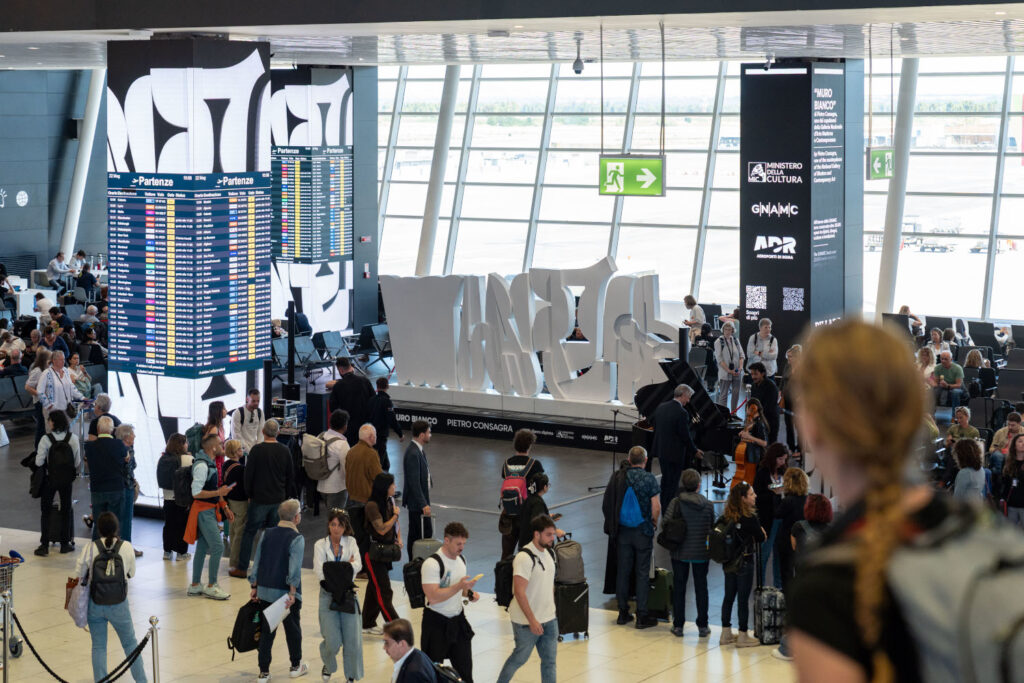
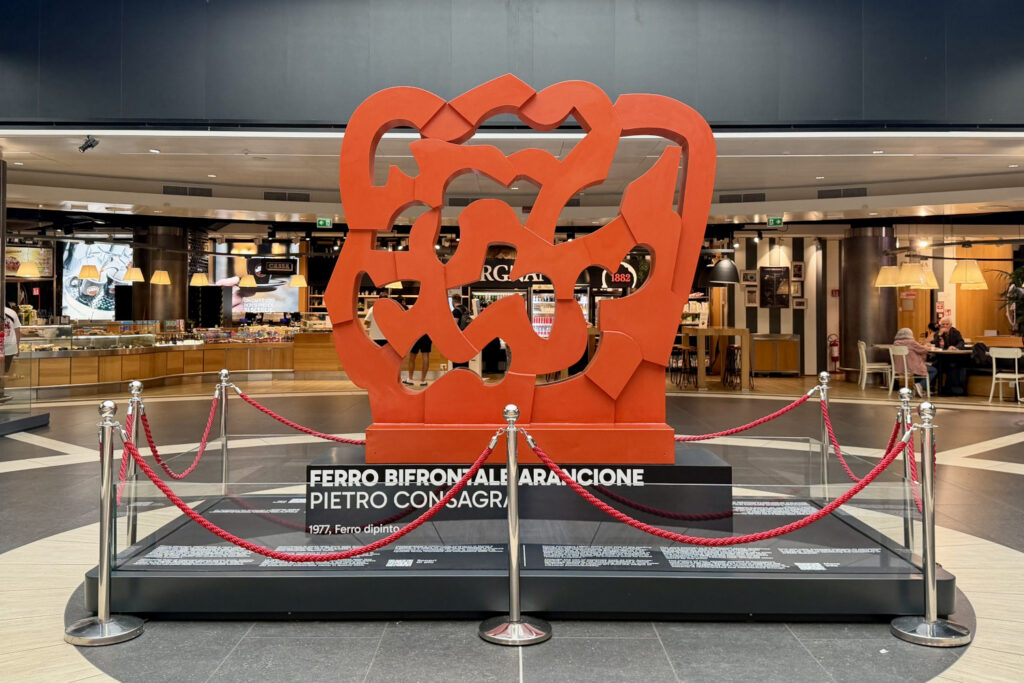
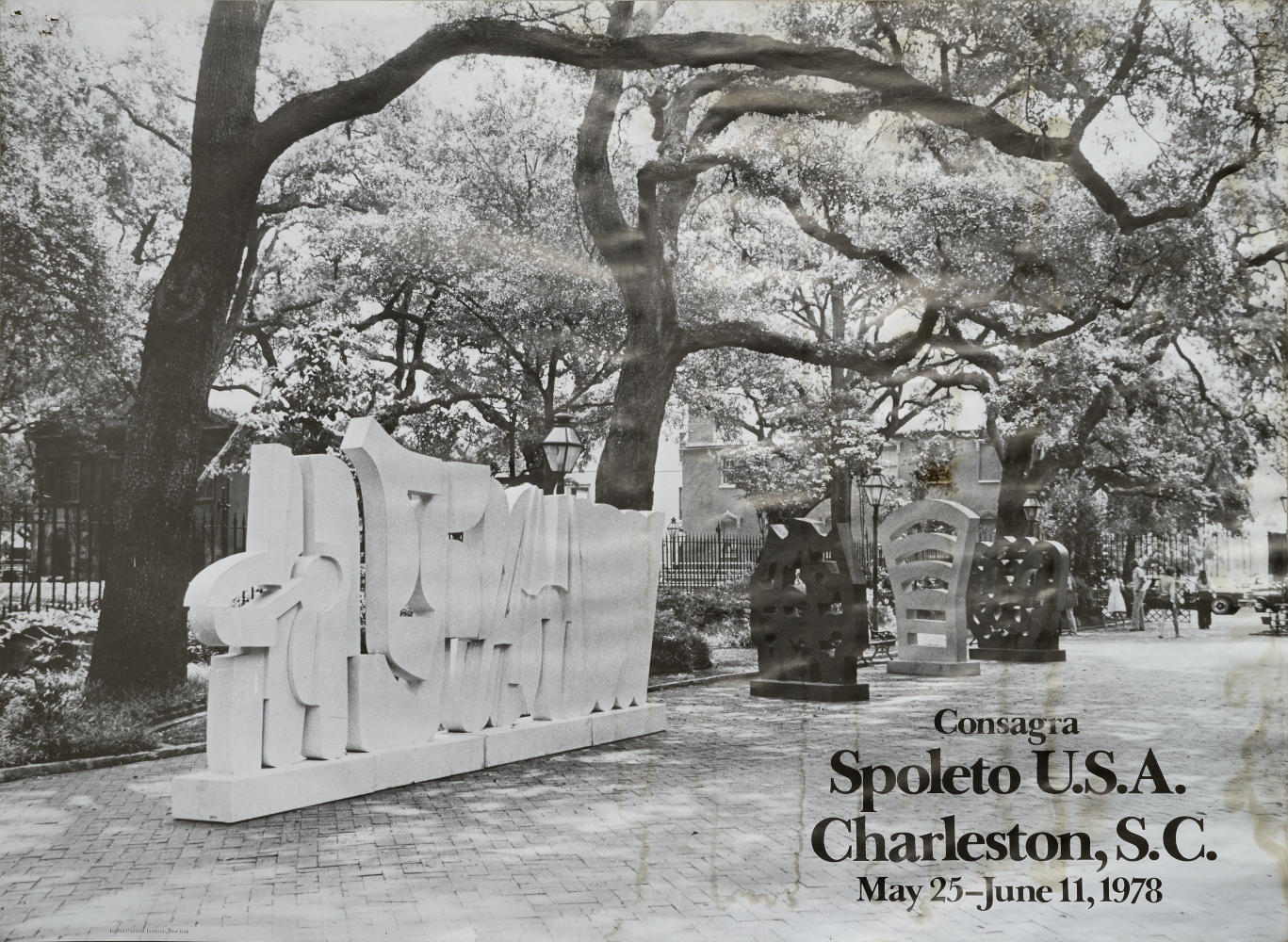
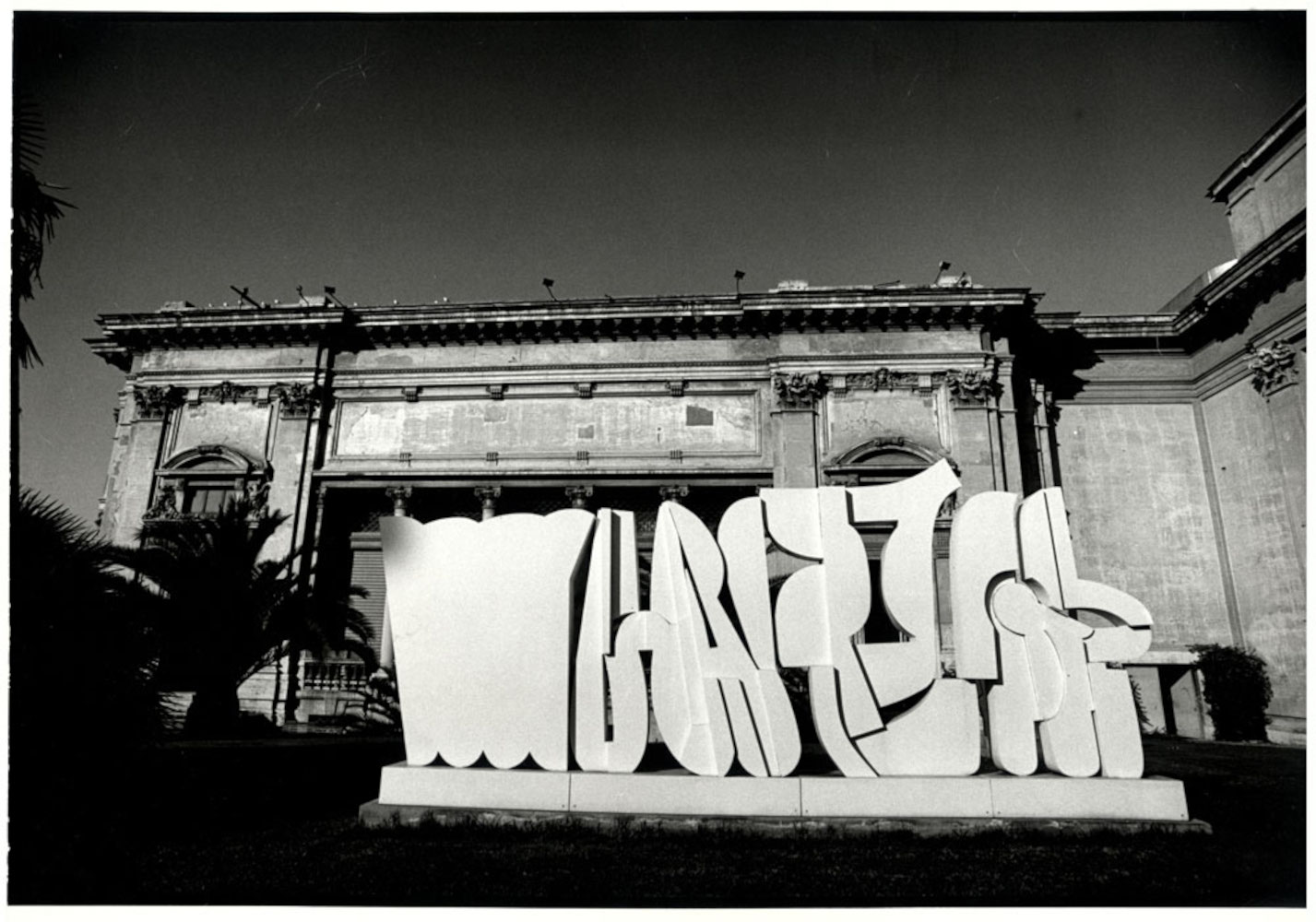
First presented in 1978 at the Spoleto USA Festival in Charleston, Consagra ‘s two sculptures transform a passageway into a space for rest and observation, establishing a natural relationship with the architecture and the movement of passengers. Conceived as elements capable of engaging with the urban space, the works reflect the artist’s exploration of frontality, the relationship between surface and space, and the possibility for sculpture to inhabit architecture without superimposing itself, but rather becoming an integral part of it.
Muro Bianco (1975), installed in Terminal 1, belongs to the series of Painted Irons , large-format works characterized by a new structural concept. It recalls an element that separates and, at the same time, connects two visual fields, both accessible and perceptible. The sculpture is composed of four juxtaposed elements, with sinuous and arabesque profiles, which integrate into a unitary, dynamic and highly rhythmic composition.
Ferro bifrontale arancio (Orange Two-Front Iron ) (1977), installed in Terminal 3, belongs to the Bifrontali series , created by Consagra between 1968 and 2004. In these works, the traditional distinction between front and back is overcome: both sides possess the same value and are designed to be observed from different points of view. The sculpture therefore does not propose a single, definitive vision, but changes along with the gaze of those who pass through and observe it. The perception of the work changes with movement and invites the public to engage with ever-new perspectives. It is distinguished by its intense orange color, a particularly significant element in the artist’s research and capable of recalling the visual sensibility of the 1970s. Painted iron, a material traditionally associated with the industrial dimension, here takes on a surprisingly vibrant chromatic quality: light continually modifies its rendering and makes the surface changeable and ever-changing.
The conservation interventions on both works were carried out as part of the teaching activities of the Master’s Degree Course in Conservation and Restoration of Cultural Heritage at the University of Tuscia – DIBAF of Viterbo, in coordination with the Restorers of the National Gallery of Modern and Contemporary Art in Rome.